

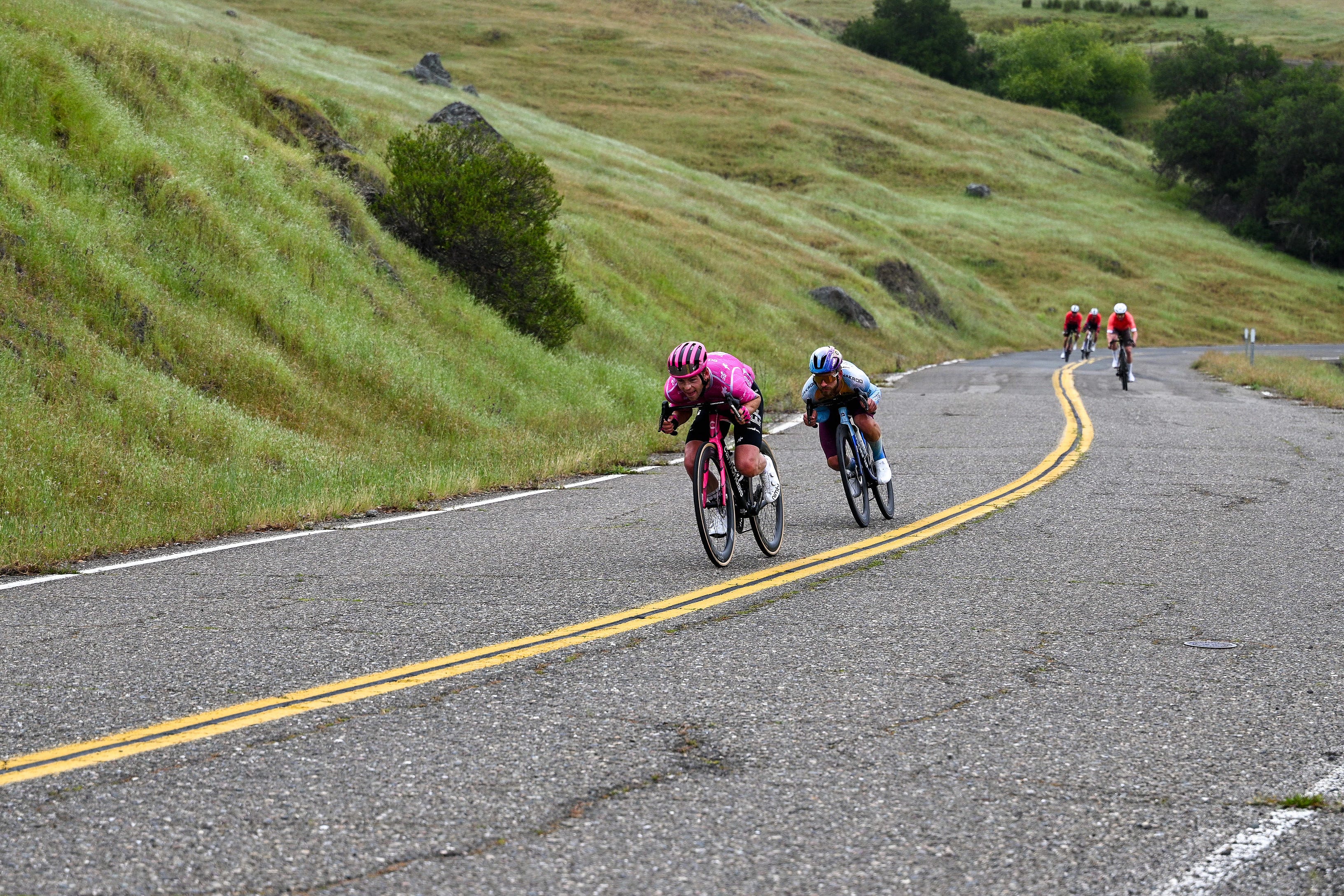
Can we dare to dream about American professional road racing? Levi’s GranFondo was back for its second big prize money year, with $156,000 on the line across two pro races. It’s quietly becoming one of the most interesting experiments in US cycling.
1. This is the model.
Mass participation underpins the future business model of road racing in the US. It’s a business model that’s been proven in triathlon and gravel. Thousands of amateur riders pay their entry fees, a pro race runs at the front, brands pay to be at the expo, and suddenly you have a self-sustaining ecosystem.
External sponsorship is still needed to fund the prize money, but that’s not a weakness, it’s just how sport works.
2. The juxtaposition of safety.
The elephant in the room is safety. It’s hard to justify billing something as the world’s richest one-day road racing pot when cars are passing in the opposite direction. Full road closures are expensive and logistically complicated in the US, and that’s a real constraint, but at minimum, a rolling closure around the main race bubble should be non-negotiable.
For the Fondo itself, open roads are a reasonable compromise. Participants aren’t racing at pro speeds and the risk calculation is entirely different without big money on the line.
Safety should always come first.
I have a theory that road closures - or lack of them - is one of the reasons pro-gravel racing has taken off so much in the US. Just today I noticed a trend that every race takeaways article I’ve written that isn’t under USAC/UCI legislation has safety in it. At Redlands, we had fully closed circuits every day and cars were never even a thought in my head. Sometimes, legislation is a good thing. I’ll probably write something on this another day.
3. The course is epic.
The course is special. 221 kilometres and 4,200 metres of elevation. Alexey Vermeulen’s Strava title said it best: “Levi’s is hard if you were wondering.” The Growler lives up to its name, and the whole thing is brutally, unapologetically tough in the best possible way.
My only wish is that the final climb ‘Geysers’ was closer to the finish-line, but some things we cannot change. Oh, and that California spends some of its tax revenue on making the roads a bit smoother.
4. The organisation is great.
The organisation deserves genuine credit. The course was well marked, aid stations were plentiful, neutral bottle hand-ups were available. Six distances ranging from 8 to 138 miles means there’s genuinely something for everyone - pros, amateurs, first-timers, and the family members dragged along for the ride. Add a decent expo with live music and you have a proper festival of cycling. It’s worth noting that the comms and media was great too.
You do pay for it though. $400(!!) for the longest distance is a lot by any measure
5. $156,000 is a lot of money.
For the second year in a row, $156,000 was on the line across the two pro races, with the top ten paying out and $25,000 going to the winner. It attracts big names, because bike racers will always be mercenaries who chase cash.
Money talks, and right now Levi’s is talking louder than almost anywhere else in American racing.
6. Calendar clashes.
The pro peloton was noticeably smaller this year, and the April calendar is largely to blame. The beauty of Levi’s is that it attracts roadies, mountain bikers, and gravel racers alike - but that also means competing against multiple calendars simultaneously.
Geographically, slotting in the week after Sea Otter makes perfect sense, but with brands pouring resources into the Traka, many gravel privateers opted to head to Girona early. Meanwhile, with the Tour of Gila starting just three days later, many roadies chose altitude instead.
The deeper issue is prestige. However much prize money is on offer, winning Levi’s doesn’t yet move the needle significantly for a rider’s sponsors. As one put it: “I wish winning this race meant something bigger.” That may come with time, and nobody gets to simply decide which races matter most - it just happens.
7. Specialized have a target on their back.
Whether racing on the gravel or road, Specialized Off-Road Racing are a marked team. Talking about the men’s race as that’s what I experienced first-hand, Keegan Swenson and Matt Beers were marked men.
It makes sense - Keegan has won this two-years on the trot, and Matt Beers was the most powerful man in the race. It created an interesting race dynamic, as the two are probably self-admittedly not the best road-race tacticians, and everyone else watched their every move.
Ultimately, the group of favourites finished in a small group rounding out the minor placings.
8. No UCI, and no USA Cycling.
It’s telling that an event this big, and with this much investment has zero relationship with the UCI or USA Cycling. It kinda creates a bandit style road race. Super-tucking is back on the cards and you’re responsible for your own mechanicals. You better not cross that yellow line, though.
Levi’s, like the Life Time Grand Prix, is a compelling case study in what American cycling can look like when it builds on its own terms rather than borrowing a governance model that has consistently failed the sport elsewhere.
9. But, the US does need a flagship road race.
Just how Australia has the Tour Down Under, and Canada has Québec and Montréal, events that mix great racing with culture, cities, and a festival atmosphere that extends well beyond the race itself. The US deserves the same. The roads are extraordinary, the cycling communities are vast and passionate, and the appetite is clearly there.
It would need to be built around a heartland of American cycling - California or Colorado - with fondos and community events wrapping around a true World Tour race to give it real draw. There is potential there, somebody needs to dare to dream.
10. You never know what’s coming next.
Two years ago, a one-day road race with $25,000 for the win would have raised eyebrows. A year ago, a US ProConti team with a $6 million annual budget would have been met with skepticism. This time last year, my theory was that Levi’s Fondo might inspire Hincapie to launch a similar event. He launched a team instead. Nobody saw that coming.
Gravel still has enormous room to grow, but dismissing road is naive. The people are there, and while the US has unique car-culture roadblocks, momentum is building in ways that would have seemed far-fetched just a few years ago.
I’m bullish - but sod’s law dictates it will happen big just as soon as my racing career finishes!
Footnote:
I stole a few bits of this article from what I wrote last year here. Last year, I also included this footnote, I feel it is needed again:
It would be disingenuous not to mention that Leipheimer is a contentious figure in US bike racing. He was one of the best cyclists in the world in an era we now look back on as the doping era. He confessed, cooperated, and has since helped rebuild the sport in his own way.
While there will always be skepticism of that era, there are many ex-dopers who have made an effort to bring the sport back to its former glory. Levi is one of them. I take my hat off to what he’s doing to try and reform road racing, and can only thank him for that.
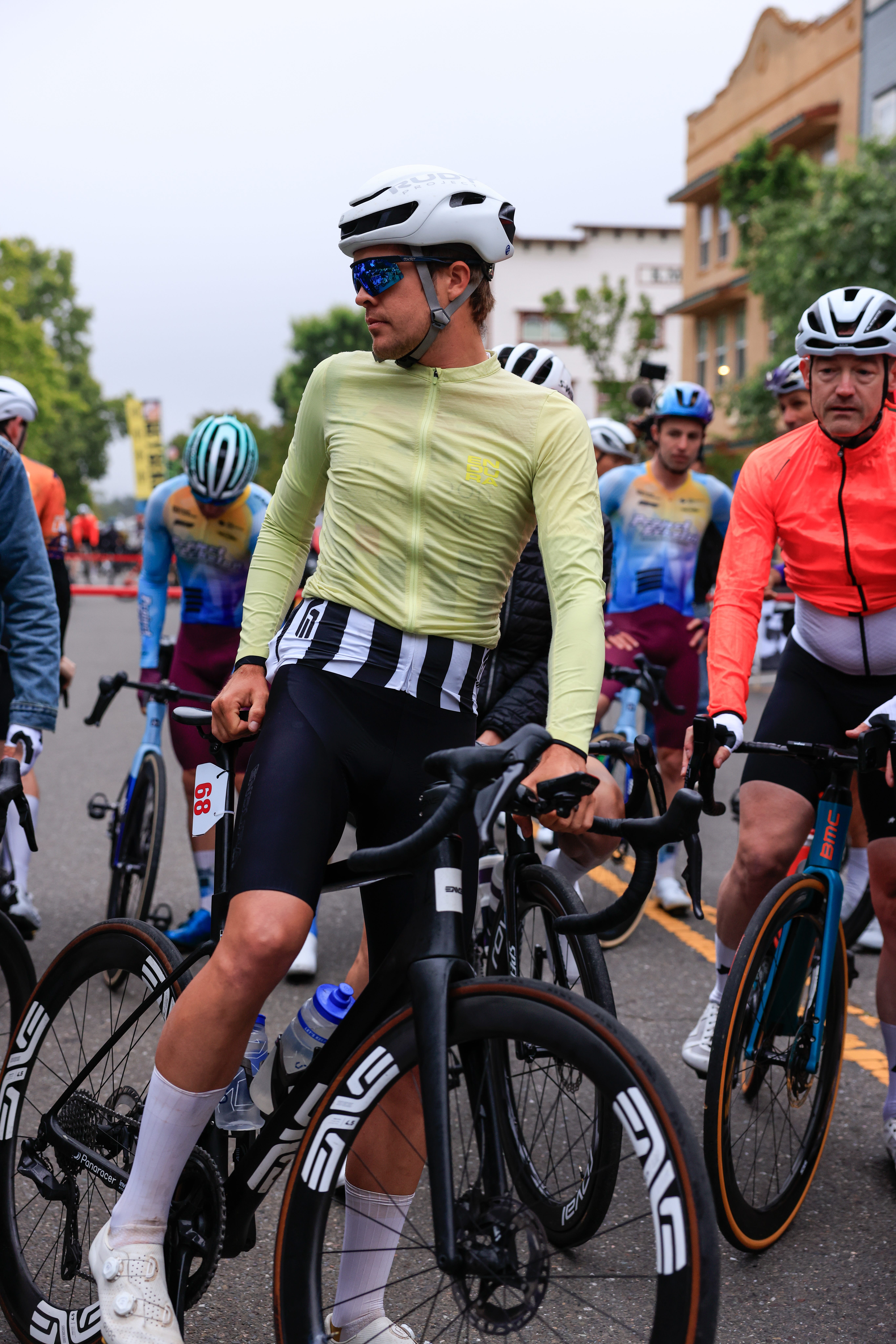
What’s next for me?
I’m back in Europe, and writing this from my adopted home town of Girona. To be specific, I’m currently sitting in Idle Hands cafe trying to fight off my jet lag.
Levi’s, like my whole US block, was a race of mixed emotions. I made the front split on the first climb, and then got dropped from that front group on the second major climb. This was extra frustrating considering it was a crazy long valley to the race deciding climb. Make it over the place I got dropped and you get a ‘free ride’ to the final test.
I don’t think I’m at the physical level I have been in year’s past. I’m not too sure why, it’s probably because I’m doing everything and bike racing isn’t my one and only priority in life. I’ve said it before, and I’ll say it again - in this modern era it’s impossible to compete at the top if you’re not ‘all in’. I don’t do myself any favours with all the racing and travel I do across disciplines, but that’s a huge part of who I am too.
I had a long chat after Sea Otter with a friend I inherently trust. He took me to the side and advised I drop some of my commitments and narrow my focus. He’s right, and my time at home is going to form a lot of that thinking.
Being back in Girona is funny too. I’ve landed straight into Traka week and it feels like Sea Otter 2.0. I’m not a huge Traka fan, so I’m keeping my head low, and just doing the events I’ve been asked to attend. After seven weeks on the road, and the last three weekends of back-to-back-to-back racing, I need a mental break!! Though, it is nice to bump into all the same people I’ve just spent the last month racing in my local coffee shop
I’m excited to get back to training on home roads, and we’ll probably head to Andorra next week. Keep an eye out this Thursday for an article that I’ve co-written. That one has been fun.
Cheers,
Joe
While you’re here…
I’ve added a paid subscription and a ‘Buy Me A Coffee’ link to this post. This allows me to write articles that don’t necessarily fit in at one of the normal outlets. Thanks for your support.
The following brands are racing partners of mine, and allow me to do cool stuff.
Rolling enclosure is so necessary for the pros especially on those roads. The TV moto driving on the left hand side of open roads all day?? What were they thinking? Terrifying
Nice recap. I am super curious if this format of mass participation fondo combined with a big money elite race will take off elsewhere in the US, or if Levi's will remain an outlier.