

Are Life Time the right owner for the very thing that they created, the Life Time Grand Prix? Building and expanding a sports league takes serious investment, with no guarantee of return. That’s venture capital risk, not publicly traded fitness club risk.
The creation of the Life Time Grand Prix (LTGP) was perhaps the greatest marketing move that they could have made for their mass participation event business. They have the best off-road athletes in the world competing in and promoting events that they own. With that in mind, the Grand Prix has already been a success.
They’ve built this success by being, relatively speaking, commercially cautious. But the instincts that make an events company profitable are the opposite of the instincts required to build a thriving sports league.
What is the Life Time Grand Prix?
On their website, the LTGP calls itself the “professional movement of off-road racing”; their social media states “Where the world’s best off-road athletes meet North America’s most iconic races.” In reality, it’s half a mountain bike series, half a gravel series – a championship built from the events Life Time has acquired or started over the years.
First launched in 2022, the positioning of the series makes it look like their aim is to build a professional league. The 2026 prize money increased by 55% to $590,000, and Kimo Seymour, the Senior Vice President of Life Time Events, said at the time: “We’re very proud of how far the Life Time Grand Prix has advanced in just four seasons, with 2026 reflecting our elevated and ongoing commitment to professional off-road cycling.”
There’s a tension for Life Time here. Their core business is mass participation, and that’s extremely profitable. For the LTGP to take off as a professional sports league, it needs to appeal to something entirely different: fans.
There’s not enough racing to build a league.
The most valuable asset to any sport is its fans. Sponsors only pay athletes because people are following them. Media rights only have value because people are watching. Everything comes back to eyeballs, and having a season-long narrative is what keeps fans interested. This is the part the LTGP hasn’t cracked, and the reason why is nuanced.
Importantly, it isn’t because the talent in the races is subpar or because nobody will ever care about gravel. One of the biggest problems is that there isn’t enough racing to sustain interest in the league across a full year.
There are very few, if any, professional sports leagues where the athletes compete as infrequently as they do in the LTGP. That scarcity is one of the key features that cap the LTGP’s strength, not the quality of what happens on the days it does race.
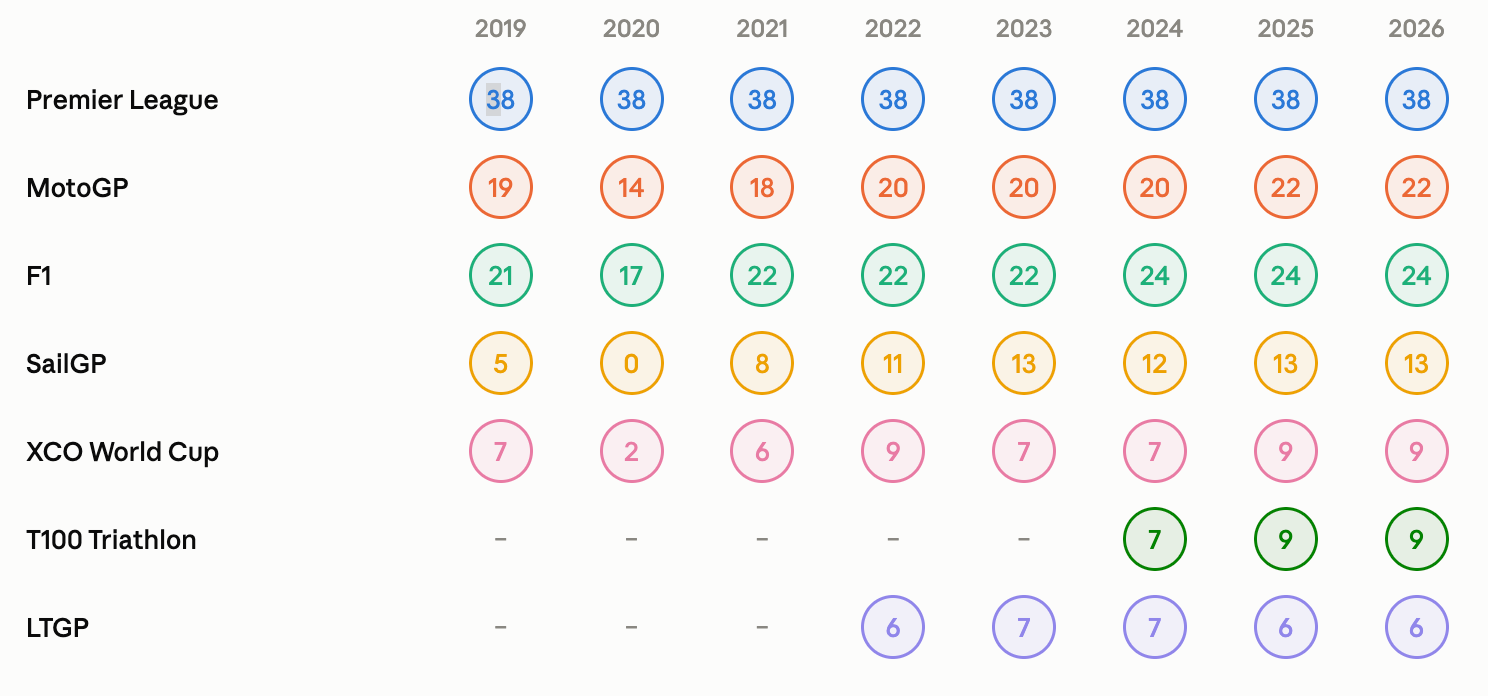
The 2026 LTGP operates as a six-race series spanning from mid-April to mid-October. The series will add one extra race going into 2027. Having a six, or even a seven, race calendar is simply not enough.
If we compare the LTGP to other sporting competitions, it becomes clear that there are too few race days. Both T100 and SailGP are new sports leagues with large private backing. After a rocky start due to COVID, SailGP expanded from its original five to a global series of thirteen races. T100 is only a few years old, but immediately came in at seven events, before expanding up to nine. Neither league treated its original calendar as the final product.
This problem is further exacerbated by the shaping of the calendar. The six weeks between Sea Otter and Unbound works, especially because the biggest non-LTGP gravel race in the world, Traka, sits in the middle. Then, it’s eleven weeks of nothingness. A near three-month break in the height of the race season creates a narrative hole.
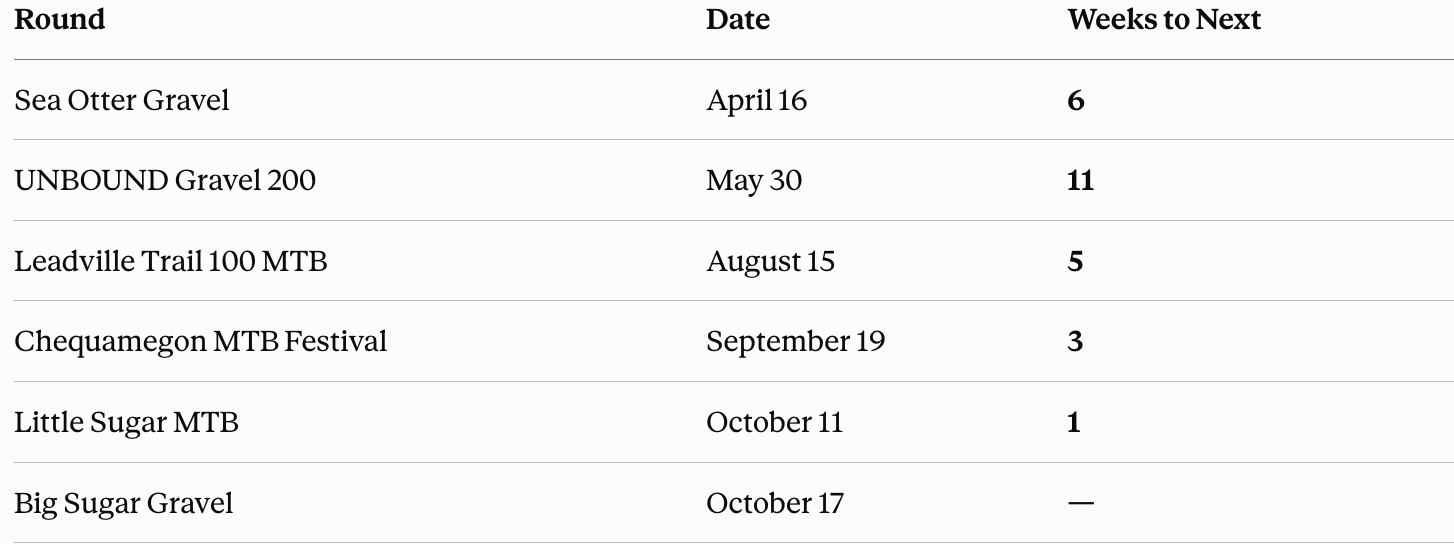
To a degree, the ‘summer break’ is a good idea. It gives athletes time to prepare for upcoming events and recover from the effort that is Unbound. However, a balance needs to be found, and a break this large erodes any narrative or hype that existed after Unbound.
The back end of the season intensifies the problem further. Half of the series takes place within the final four weeks. The split of events doesn’t help the case too: Gravel, Gravel, MTB, MTB, MTB, Gravel. After the eleven-week post-Unbound gap, it feels less like a mixed-discipline series, and more of a mountain bike series.
This isn’t just me making the case to give fans more to watch; it’s about giving Life Time something to sell. Sponsors pay for attention, and attention has to be earned consistently.
The audience the LTGP already has is exactly the one that corporate partners want. Participants and fans of these events have high disposable income that non-endemic partners pay to reach. A calendar built to hold attention all year is what turns that audience into an asset that household names are bidding for sponsorship packages, not just a ketone or hydration brand.
Life Time’s ownership conundrum.
It isn’t just that the LTGP doesn’t have enough races; it doesn’t have the right ones either.
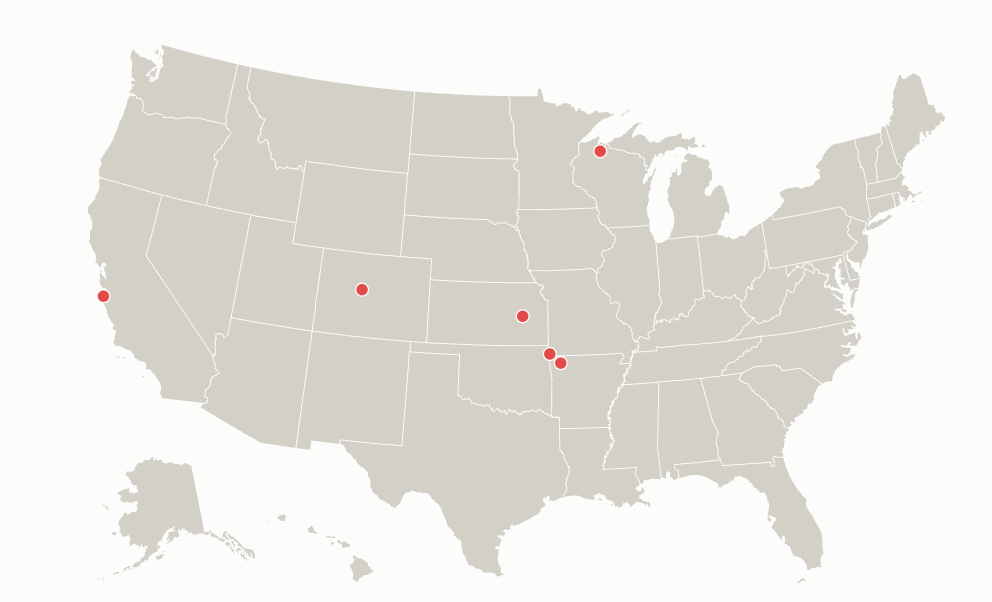
As previously mentioned, the LTGP is a championship of the cycling events that Life Time owns. While this strategy works in theory, it makes it difficult to claim “the world’s best off-road athletes meet North America’s most iconic races”. Many of the “most iconic races in North America” aren’t in their championship.
They hold the crown jewels in Unbound and Leadville, but if we were to draft a list of the ten best off-road races in the US, a majority would not be owned by Life Time. This is their Achilles’ heel. To expand as a professional league, Life Time has to relinquish some control.
Working in collaboration with existing race organisers rather than acquiring them would be a win for all parties. The independent race organisers would get a deeper pro-field and therefore more coverage. They would also keep the (often profitable) mass-participation side of their business, which would inevitably increase due to the pro attendance. The pros get a deeper calendar with a clearer sell to their sponsors. And Life Time gets a better product they can take to corporate partners, as well as maintaining control of the events they currently own.
Whether Life Time would ever allow this is another point. Their current mentality when it comes to events is comparable to a black hole: suck up everything.
Alongside adding non-Life Time owned races into their calendar, they should identify key growth areas to build races. The Front Range, Oregon, Texas, or anywhere on the East Coast are all obvious contenders. The goal should be to build races in, or in close proximity to, areas with an already healthy cycling scene.
Bringing bike races to places that people would already want to travel to is an easy way to increase attendance. SBT GRVL in Steamboat Springs and Oregon Trail in Bend are both good case studies. The events borrow the town’s pull, which is far easier than manufacturing demand.
A league is only as credible as the races within it, and right now there are too many races missing. Collaboration closes that gap quickly. It solves the problem of calendar expansion and brings legitimacy to the series. Building new events takes more time, but also brings new opportunities in growth markets. Both paths matter equally.
Mass Participation vs. Pro Racing
The current Life Time courses are great for mass participation fondos, not for bike racing.
There is an insurmountable tension between the two. Given mass participation is the profit engine, the motivation to address this will always fall on deaf ears.
However, with the premise of this article being the growth of the LTGP, I’m going to look at how they could make the LTGP more spectator-friendly. I’m not advocating to change the classics: there is a beauty to Unbound being 200 miles in the Flint Hills, and Leadville being 100 miles at altitude. But there should be experimentation with new formats of racing.
The 2025 championship finale, Big Sugar, was halved to 50 miles due to adverse weather. It was arguably the best thing that happened to the LTGP that year. With the overall series still hanging in the balance, it was two hours of edge-of-the-seat racing that wasn’t decided until the final fifty metres. Adverse weather accidentally handed the series the crescendo it needed.
Sofia Gomez Villafane, the overall winner of the Women’s Life Time Grand Prix, summed it up: “I was praying we were going to do the 50, I thought it would just deliver some really exciting racing. It was chaos for 50 miles, attacks going left and right, and it came down to the wire.”
There’s an obvious argument to bring a Short Track MTB race into the series too. The US has an abundance of MTB talent; trying to coax those riders who ply their trade on the World Cup circuit to some rounds of the Grand Prix would only increase external attention.
A short track race could be easily implemented as part of a double race weekend at Sea Otter*, or as a part of the Sugars at the end of the season. Trialling a ‘dirt crit’ could be a nice halfway house and mean that XCC specialists don’t have too much an advantage.
In a world of sports moving to be more spectator-friendly, gravel continues to embrace long distances. The LTGP is the perfect test ground, but the organisation seems bizarrely immune to experimentation.
The positioning of the Poggio in Milan-San Remo, or Montmartre on the final stage of the Tour de France, creates a ‘will they, won’t they’ scenario that stays unknown until the closing metres of the race. What is the LTGP’s moment? It can’t be something like Leadville’s Powerline, a climb so decisive that the strongest rider can go solo; it needs to be a finale that creates the most uncertainty.
This year’s Leadville finale was accidentally the perfect case study - again, a course change forced by external environmental conditions - the men’s race was a thrilling final 15-minutes where five riders could’ve won.
*I’ll write something about the new LTGP selection criteria at a later date.
The Life Time Grand Prix must evolve, or risk death.
The LTGP holds all the cards to create a bike racing product for the twenty-first century. There’s no tradition, and a blank sheet of paper. It’s an unprecedented opportunity.
Life Time has put money and structure behind American off-road racing, and more jobs exist because of that. I respect, and thank them for that. But, in doing so, they have quietly built into an A.S.O. style figure. They own the crown jewel events, influence the biggest athletes, and, to a degree, have become the de facto owners of professional gravel racing. With great power comes great responsibility.
Building the LTGP would require Life Time to do things that don’t come naturally to its existing business model. They would have to spend money based on speculation. They would have to build a calendar based off the best racing, not what already exists in their portfolio. Perhaps most crucially, they’d have to give up some control.
As previously mentioned, this is venture-capital risk, not publicly traded fitness club risk. Why would they take the risk?
The obvious case study to look at is Ironman. The triathlon giant has nailed mass participation alongside pro-racing. Yet, I don’t think it’s as simple as many claim. Ironman has a very clear and exportable unique selling point (USP). It is a bucket-list distance that can be packaged and sold across the world. Life Time doesn’t have this, their events largely depend on the location: Unbound is the 200 miles of Flint Hills. Leadville is altitude, Columbine, and Powerline.
That lack of USP is the single biggest risk. Life Time are very good at running events, but will events alone be scalable enough for this to survive? Furthermore, the LTGP has been driven internally by Kimo Seymour; what happens in the world when he retires or moves on from the company?
Expanding the Grand Prix would make it harder to kill. The more established it becomes as its own product, the more it attracts media rights deals and big-name commercial sponsors, the less of a chance someone at Life Time’s corporate HQ will kill it - even if the key player is no longer there. As a public company, everything sits on a P&L that one day can be cut.
Life Time was the right owner for getting this off the ground. Whether they’re the right owner for the next twenty years remains to be seen. They accidentally created something that could become a valuable sports property, but they haven’t yet decided whether they want to build that sports property, or just use it to market their events.
Unless it makes money in its own right, the Life Time Grand Prix stays a marketing tool. And marketing tools, eventually, all meet the same end. Death.
Side note 1:
I didn’t know where to put this, and the piece is already longer than I thought, but it’s worth thinking about who would buy the Life Time cycling events portfolio. Ironman was acquired in 2020 for $730m. A year later, Ironman bought 45% of trail-running giant UTMB, for €12.4m.
Anybody who would buy the Life Time cycling events (and therefore the LTGP) would have a rebrand, a global expansion, and the task of making it the default home of gravel racing on their hands.
Side note 2:
Please, don’t think I am advocating for the erasure of the culture that made gravel racing what it is. That culture is not just the charm of the sport, it is the sport. Many of you will read this and think gravel should have stayed small and community-based. Honestly, I often find myself agreeing with you, but the cat left that bag a while ago. There will always be grassroots events that epitomise everything we love about gravel. The same can be said about road, time-trial, MTB - any discipline, really.
The biggest events have been owned by the multi-billion-dollar corporation for a while now. There is a world where the corporate ownership of Life Time can exist with the culture that made gravel be gravel. I have witnessed that with my own eyes. If the Grand Prix was to grow commercially, I strongly believe it would benefit the grassroots level.
Life Time has got a lot right, but they also take some things too far. I like to believe that the commercial success of the LTGP would help to mitigate the ever-rising entry fees at the big events - Unbound entry is $350. I know this is unrealistic to expect, in an American world, profit will always win. But it shouldn’t have to be one or the other.