

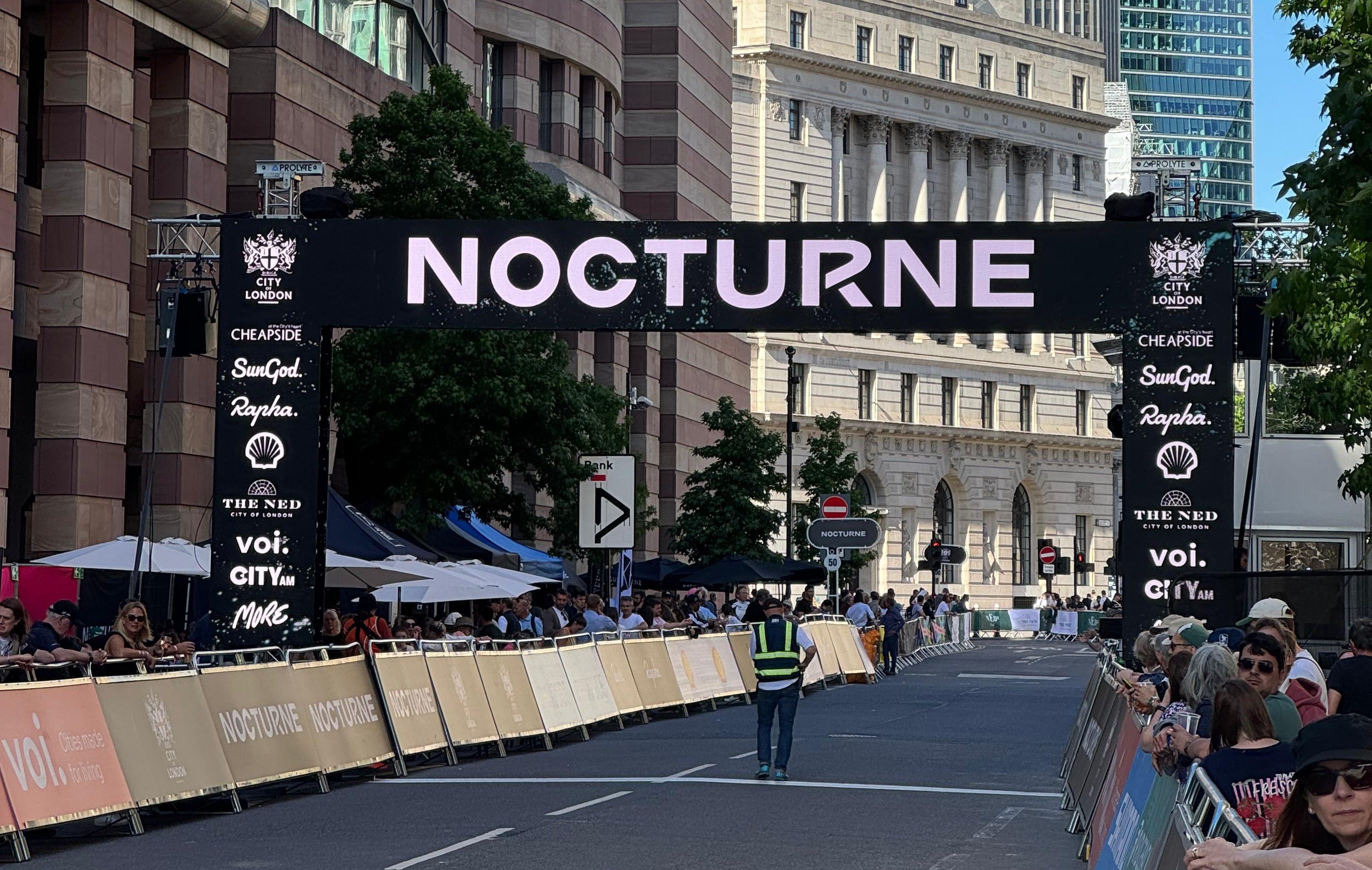
1. The London Nocturne is back.
The London Nocturne returned with a bang after eight years away.
The crowds were deep, the racing was good, the media was great, and the buzz in the city was real. It’s exactly what the British cycling scene needed. One sports event expert who attended summed it up to me: “Very successful return. Masterpiece of event logistics.”
The best part? The City of London Corporation approached James Pope, the organiser. Not the other way around. That detail matters, there’s a desire for bike racing.
2. Bring bike racing to the people.
Make things that people want.
To have a good bike race, you need fans. To have fans, it needs to be an event that people want to go. It needs to be fun and in a location that’s easily accessible.
Crits are the answer. Put it in the centre of a city with an incredible cycling scene, and you’ll get a crowd - it’s not rocket science.
This is what cycling needs.
3. The right economic model.
The question nobody asks loudly enough: who pays for these events?
The Nocturne has kinda answered it. Their model is varied: multiple sponsors, a Pro-Am corporate day on the Friday, and buy-in from local stakeholders. It’s also why the City of London’s approach to Pope matters so much. Everything becomes much simpler, and most importantly, cheaper when you own the streets.
The Nocturne also has a huge future lever to pull with the London running community.
4. What’s next for Nocturne?
Build. And keep building.
The goal should be to make it a race that the biggest crit riders in the world want to attend. If you have the best riders, the event grows and grows. The potential is huge.
It looks like there needs to be a clearer qualifying system - maybe a flying TT lap in the afternoon - to make the gridding system fairer? From a safety perspective, it the neutral lap needs scrapping too.
5. Can the UK build?
It’s not just the Nocturne, VIA Crit has proven the model in London too. Ilkley and Otley do a class job up north, as does Sheffield GP.
Is there a world where GCN hosts a crit/ event in Bath or Bristol? How about British Cycling organise one in Manchester? If they’re going to organise the Tour of Britain, why not grassroots too?
Is there a point where we can have the ‘Battle of London’ crit week with the Nocturne, a Crystal Palace, and the VIA Crit within one week? Or if Ilkley, Otley, and Sheffield formed a Yorkshire Cup?
Good events are the answer to unlocking the cycling scene.
6. Road is not dead.
Ride Regent’s Park at 7am on a Friday and tell me domestic road cycling is dying. There are hundreds of riders of all ages and abilities riding laps before the city woke up.
The same thing happens every morning in every major city in the world. A thriving, healthy, completely alive road scene playing out before most people have had their coffee.
So why does everyone keep telling me the road is dead? It isn’t.
The audience is there, it always has been. Events just need to focus on being as fun a spectator experience as possible.
7. The 2010s were NOT a baseline.
The British cycling boom was extraordinary. Success on a global level was normalised, and the domestic scene underneath it was thriving. But underneath it all was a different world.
Marketing spend in the 2010s was more liberal, with more money floating around and less scrutiny on where it went. With the rise of influencer marketing and targeted ads, coupled with a world of higher interest rates and tighter budgets post-Brexit and COVID, the money situation is different. I’m not saying that’s the sole reason so many domestic cycling teams collapsed, but it was one of the many dominoes.
Yet not everything that drives a brand can be measured by a dashboard. In-person events count for something a spreadsheet can’t capture.
8. Organisers don’t get enough credit.
It only takes a few good events, and an entire narrative can shift. James Pope, I don’t know you, but what you put on was spectacular - thank you.
The same can be said for David Trimble. He did it with Red Hook, he’s now doing it in running. Michael and Mike at VIA Crit deserve credit for what they’ve done, too.
There are countless others I haven’t named, and thank you all. Often it comes down to these people who have the passion to take the initial steps and risks.
So here’s my question: what can the industry do to support these people? To lead the charge and invest in events rather than waiting for individuals to prove it works first?
9. A moment for the Voi City Bike race.
Formula 1 had fun with a Lego car race, MotoGP had their tuk-tuk race. The Voi City Bike race was from the same playbook.
As the winner, Tobias Daulhaus (who also happens to work in marketing) said:
“It’s something instantly recognisable by a mass audience, paired with the silliness of the racing and people committing in full race kit. It’s driving conversation, and leading to more curiosity around this big spectacle.”
This race was made for social media, and that’s what modern sport does best.
10. Why don’t we have a Criterium World Champion?
Seriously, question to the world, why don’t we have a Criterium Rainbow Jersey?
Imagine a World Crit Champs taking place in the heart of London, on the streets of Berlin, or under the Manhattan skyline. A man can dream.
11. Or, a Global Crit Series?
Tulsa Tough. Armed Forces. Athens Twilight. Gastown. ZuriCrit. VIA Crit. London Nocturne. PoliCrit. And a load more I’ve forgotten.
There is a world where we have a global crit scene. Bike racing in the heart of the biggest cities in the world. How can it happen?
12. £250,000 for another Rebellion.
It was Matt Bostock who won the men’s race. Bocky is an insanely good crit rider, one of the best in the world. He was also a Rebellion rider.
Pound for pound, crit racing offers one of the best ROIs in the sport. You can build the best crit team in the world for a very modest number by sports marketing standards. I’ve seen the potential firsthand. I know the playbook. I have the timeline. The only thing I’m missing is the financial part.
Rebellion had so much unrealised potential; we can build it back bigger and better. We can take bike racing to the people. We can make something that people want to be a part of. Something that means something.
I have the financials. I have the spreadsheets. All it takes is one brand willing to back it.
Call me.
While you’re here…
I’ve added a paid subscription and a ‘Buy Me A Coffee’ link to this post. This allows me to write articles that don’t necessarily fit in at one of the normal outlets. Thanks for your support.https://www.buymeacoffee.com/joelaverick
The following brands are racing partners of mine, and allow me to do cool stuff.
Honestly Crit racing is cycling’s best-kept secret. It baffles me that a sport so logistically and commercially viable doesn’t have more interest!
I literally was just in London last week but didn’t know about this 🫤. That said it is obvious the city has a vibrant cycling scene - heck even rental bikes work there. And I love your criterium “world series” idea. Lot’s of opportunities for great locations and so spectator friendly you would think there might be sponsor appeal?