

The organisation behind Picnic-PostNL has been known by multiple names over the past decade. For clarity in this article, no matter the year I am talking about, I have chosen to call the team by its current name, ‘Picnic-PostNL’.
They’re sitting dead last in the men’s WorldTour rankings, and a dozen ProTeams are ahead of them. They’re sitting dead last in the Women’s WorldTour rankings. They lost €19.5m in three years. Their bike sponsor is in judicial reorganisation. And it seems every rider who leaves the team significantly improves.
What the hell is going on at Picnic-PostNL?
This is a team that has won the Giro d’Italia, collected Grand Tour stages and nurtured a generation of the sport’s best talent. Now it's struggling on every front. Dig into the problems, and the red flags keep coming, with almost all of them leading back to the same place.
How to lose €19.5m in three years.
Money talks in professional sports, and Picnic-PostNL’s accounts are singing off-key. The team’s finances are a good place to start: they expose how the team is run and show why it may never bounce back.
Earlier this year, Substack account ‘Money in Sport’ reported that the team lost €19.5m between 2022 and 2024. The article revealed that Picnic-PostNL had personnel costs which were running at 134.5% of revenue. In simple terms, for every €1 the team brought in, they were spending €1.35 on staffing costs alone.
The revenue side of the equation is clearly the problem, with the team drastically underperforming versus the rest of the WorldTour. Their accounts show an average revenue of €11.9m across those three years.
Their 2025 accounts show a significant jump in revenue to €17.7m. This is largely presumed to be the reported €6m that the Ineos Grenadiers paid for the services of Oscar Onley.
So, while the revenue increased, it’s unrealistic to see this become a trend - you can only sell your star rider once. And, even still, a revenue of €17.7m in 2025, a year when the average WorldTour budget was €31.1m, isn’t enough.
Then there’s the debt; documents seen by Money in Sport show the team to be reliant on €16m of loans at the end of 2025 at a subsidised interest rate of 1.25%. There is no clear way to repay this, and it’s presumed whoever holds the loan is writing it off. One expert called it a “dicey situation”, another saying “Financially fragile would be the polite way to describe it.”


Unfortunately for Picnic-PostNL, their money problems will likely continue. Their latest going concern disclosure sheds light on the situation: “To ensure going concern for the 2026 season, we are dependent on agreements with current and new partners to be able to pre-invoice 2027 sponsorship income to meet our liquidity requirements for the current season.”
Put simply: Picnic-PostNL is already spending next year’s money.
Lapierre and the Accell collapse.
In modern professional cycling, equipment is becoming ever more important. And while a team changing bike sponsor isn’t news, Picnic-PostNL’s move from Scott Bikes to Lapierre Bikes for 2025 brought headlines.
The switch came late in the year, with multiple sources indicating that the team had already ordered their bike from Scott, and riders weren’t made aware of this until as late as October. The Dutch site Wielerflits reported that one of the reasons Lapierre moved to sponsor the team was because Accell Group, their parent company, was losing money and wanted to rid itself of excess stock.
Lapierre is an undeniable downgrade in performance versus Scott. And while it’s not uncommon for a team that’s financially struggling to take on sponsorship of a worse product that provides a greater financial benefit, dig deeper and this deal seems to be a lose-lose.
The Dutch-headquartered Accell Group was bought for €1.56b in 2022 by a consortium led by KKR, an American investment firm. This move proved to be horrendously timed, with Accell proceeding to lose over €700m in the following two years.
This was all public knowledge at the time. Yet in December 2024, the team announced a four-year deal with Lapierre, a brand whose parent company was in a deep financial hole. Hindsight is 20/20, but that looks like a serious misjudgment.
In August 2026, Accell was granted a suspension of payments, and Lapierre filed for judicial reorganisation in France. Days later, an Amsterdam court declared Accell bankrupt.
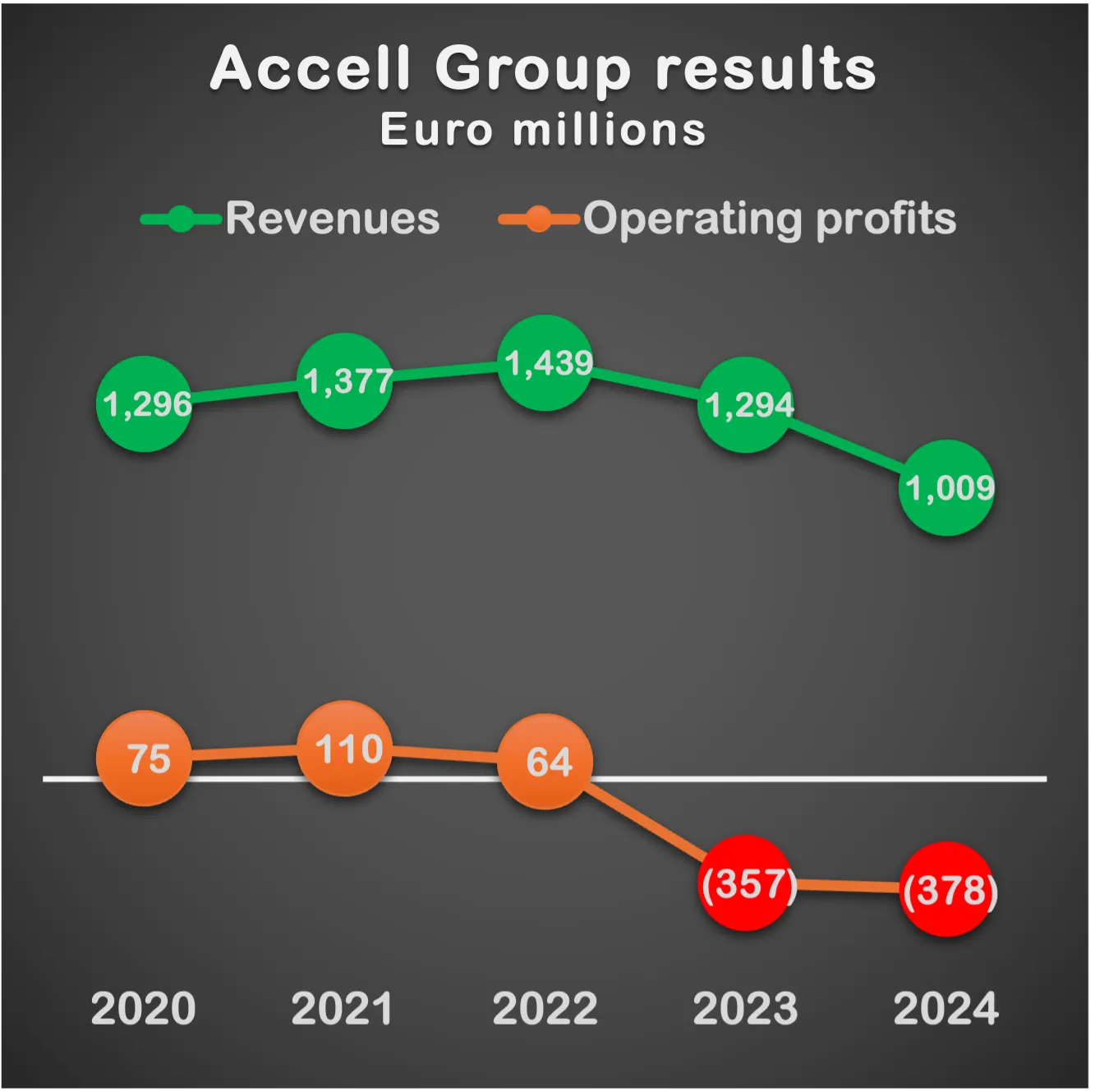
Lapierre isn’t the only time the team has stepped down in equipment. In 2026, the team swapped its tyre partnership from Vittoria to Michelin. Riders I’ve spoken to have reported substantial rolling resistance and do not trust the tyres, even noting that they have caused freak crashes. One can only assume Picnic-PostNL’s switch was financially motivated. Why else would you choose to go slower?
The culture of control.
Picnic-PostNL has a long rap sheet of issues between the team and its star riders. It is rare for a professional cyclist to leave their contract early; it is even rarer to leave their contract mid-season. For Picnic-PostNL, it’s an annual occurrence.
Marcel Kittel. Warren Barguil. Tom Dumoulin. Ilan van Wilder. Marc Hirschi. Michael Matthews. Tiesj Benoot. Lorena Wiebes. Charlotte Kool.
Here lies a list of big names that decided to up and leave under a cloud. Sometimes it was money-motivated; more often than not, it was culture-related. Picnic-PostNL’s management style is their way or the highway.
Two names sit at the top of the tree that are often pointed to as the root of the problem: Iwan Spekenbrink and Rudi Kemna. Spekenbrink founded the team in 2008 and has headed it ever since as CEO. Kemna joined the same year and is now Head Coach. The culture of the team is their culture.
In 2021, the Flemish broadcaster Sporza published an investigation into the team. Most riders spoke anonymously, and the findings were damning. Two said they were “treated like little children”. Another told Sporza: “The team doesn’t realise that it is working with people instead of robots. They want 33 riders who all do the same thing and think the same way. But actually, you are dealing with 33 individuals.”
The harshest criticism was aimed at the top of the management tree. “The worst thing is that Kemna and Spekenbrink never question themselves,” one rider said, “If two riders break their contracts, you can still say that it might be down to their character. But if ten disgruntled riders terminate their contracts, then that is no longer a coincidence.”
Spekenbrink’s public response largely proved their point. He dismissed some of the criticism as “riders who really wanted to stay at the time, but didn’t get a new contract” and in another interview went on to say that “We are always open to dialogue, that is based on arguments. And then everything is open for discussion.” Sources within the team told me dialogue is not something management are fans of.
That criticism came in 2021, and in the five years since, little has changed. In January this year, Pat Eddy, a product of the team’s development system, won the Australian National Championships, just months after Kemna declined to offer him a new contract. In his post-race interview, Eddy didn’t hold back: “I told Rudi Kemna I’d make him look a bit silly when he gave me the flick, so that one’s for you, mate.”
In August this year, just eight months after starting with the team, nineteen-year-old Megan Arens, the 2025 Junior World TT Champion, terminated her contract by mutual agreement. It’s not just the stars leaving, the team can no longer keep its brightest young talent.
The staff are leaving too. Marc Reef left for Jumbo-Visma in 2021 and later became their Head of Racing. While I was drafting this piece, Matt Winston, the British sports director behind many of the team’s few big wins, announced he was leaving for Decathlon CMA CGM.
All of this creates a reputation, and reputations stick. The more riders who leave in unusual circumstances, the less appealing the team becomes to new ones. One former pro I spoke to had no other offers on the table, but chose to end their career rather than sign for the team. Another rider told me that when the team came calling, they instructed their agent not to even open talks.
The evidence has been piling up for years. At what point will management look in the mirror?
Kemna answered that question back in 2021. Speaking to Wielerflits, he said: “Well, actually, we aren’t strict enough yet… I am convinced that our way of working is the future.”
The world’s best development team*.
There is no denying the talent that the team has developed. Their going concern document even states their “development philosophy remains a key pillar of its long-term strategy.”
The reputation as one of the world’s best development programmes comes from its Sunweb era (2017-2020). Back then, it was one of few in the sport and had little competition for talent. Hagens Berman Axeon, SEG Racing and Sunweb were the three big names. It wasn’t until Groupama-FDJ launched its development team in 2019 that WorldTour development squads started to become the norm. Picnic-PostNL didn’t get worse at development, everyone else caught up.
The same was true on the women’s side. The team brought a generation of the best women’s riders in the world through the system. The most winning rider in the WWT, Lorena Wiebes spent her formative years on the team, as did Juliette Berthet (née Labous), Charlotte Kool, Liane Lippert and Franzi Koch.
The story goes that they identify and develop young talent who then move away on big money deals. Cycling’s lack of obvious transfer system means the team invests in development, but doesn’t reap the fruits of their labour.
That’s partly true, but there’s more to it. To profit from the riders it develops, a team has to tie them to long contracts, as football (soccer) clubs do. That’s why the Onley deal worked: he signed a five-year contract at the end of 2022, so when the Ineos Grenadiers came calling, they had to buy him out. Spekenbrink himself says the team’s job now is to “play the transfer game better than the competitors.” That model relies on two things: identifying generational talent you can later sell, and the money to lock them into long, lucrative deals.
But “playing the transfer game” only works if you have the talent in the first place and there’s a bigger problem at play. For what’s claimed to be the world’s best development team, there’s an eerie correlation between riders leaving and instantly improving.
The post-Picnic glow-up.
When there’s enough evidence of riders leaving and immediately getting better, one has to look at the internal structures. Especially when the team requires all of its riders to be coached by them.
One of the main criticisms is that riders are put into predetermined boxes rather than given personalised training. One former rider told Sporza that if you trained even slightly differently from your schedule for a day, an angry staff member was on the phone immediately and you had to justify yourself. Other riders have said that they don’t train enough, and that the team doesn’t listen to their demands.
The 2026 season brought a host of case studies. Pat Eddy spent two years with the development team and two with the WorldTour squad before being let go. Based on UCI Points, Eddy’s 2026 is twelve times better than his best with Picnic-PostNL. Tobias Lund Andresen, a product of their development team, left at the end of 2025 and immediately took the first WorldTour wins of his career in January.
Another rider who left last season was Dutch sprinter Charlotte Kool. With nearly eighteen months still left on her contract, she moved to Fenix-Deceuninck. Her results speak for themselves, she’s taken six wins, including Scheldeprijs, and at the time of writing she’s eighth in the PCS Rankings, with the highest points haul of her career.
The clearest example of all is Franzi Koch. The German joined Picnic-PostNL six months into her professional career and stayed until her move to FDJ United-Suez. Her season highlight was winning Paris-Roubaix, but a string of podiums and Top 10s at the world’s biggest races shows the magnitude of her improvement.
Again, PCS Rankings (below) tell the story.

The team’s answer to riders leaving has been to appeal to loyalty. In an interview this summer with Rouleur, Callum Ferguson, the coach who oversees the women’s team, said:
“Our vision is to create a team that starts a journey together. One that develops, rides, lives and learns together. When something goes wrong, they don’t let themselves down but everyone – it’s that feeling of all being in it together, of creating a team environment of all being responsible for each other…If a shark comes in and says you can come to SD Worx for an extra €20,000, they sit there and say, ‘Yeah, €20,000 more would be nice, but if I leave now I’ll let down my teammates who I’ve raced with for the last few years’”
The sentiment is understandable, but with the median WWT salary at €80,000, €20,000 is a significant pay rise. Professional cycling careers are short, and asking riders to turn that down out of loyalty isn’t building a team culture. It’s asking them to subsidise the team’s budget with their own livelihoods.
At the end of 2026, there’s set to be a further exodus of talent. After spending her whole career with the team, Pfeiffer Georgi is switching to UAE Team L’IMAD. On the men’s side, Casper van Uden and Pavel Bittner, the team’s only two race winners this year, are also heading for the door.
If riders were stocks, the smart money would already be buying Georgi, van Uden and Bittner.
Is there any way back?
The premise of this article was to conduct an analysis of what’s going wrong and figure out how to fix it. There is no hiding in elite sports and the facts speak for themselves.
In any other sport, if you were performing this badly on the pitch, had a financial situation this dire, and your best talent left and instantly improved, heads would roll. The team’s uncompromising culture has left it so far behind that its reputation is badly damaged.
They are in a self-fulfilling spiral. The worse their reputation becomes, the harder it becomes to attract young talent. The fewer young talents they develop, the worse their supply of riders to the WorldTour team. The worse the WorldTour results, the fewer sponsors they attract.
Suggestion 1: Drop to ProTeam level.
This is the level the team is currently at both in terms of budget and talent. There’s an inevitability that it will happen naturally. Given their (lack of) sporting performance, the team will almost certainly be relegated from the WorldTour at the end of the current cycle in 2028.
On paper, being a ProTeam has its advantages: lower fixed costs, fewer mandatory race days, and they can race at a level that matches the budget. In this scenario, the WWT team and the development team would carry on as normal.
Whether the team drops by choice or by relegation, it risks losing the most important asset any team has: automatic access to the Tour de France. There is no doubt that some, if not most, of the team’s contracts are linked to participation in the Tour de France.
The current regulations state that the top three ProTeams are automatically invited to every WorldTour race, and then each race has Wildcard invites too. Picnic-PostNL are currently ranked 30th in the world, behind twelve ProTeams. So, it’s unlikely they’d get the auto-invite. And, Wildcards are often politically motivated based on a race’s nationality, or star-rider pull. For the Grand Tours, Picnic-PostNL has neither.
This is effectively the situation they will sleepwalk into by the end of 2028, so while choosing it in advance would save costs, giving up the next two years in the Tour de France makes little sense.
It does remain to be seen if the UCI will make this choice for them. The team was only granted a single-year WorldTour licence, rather than the standard three.
The day before this piece was published, Vélo-Club reported that, according to its sources, Picnic-PostNL is considering voluntarily dropping down to ProTeam level.
Suggestion 2: All in on women’s racing.
The men’s market is out of control. With a culture and reputation as poor as the team has, the only way they will attract talent is by massively over-paying riders. Their financial situation does not allow for this.
The team already acknowledges the problem with the men’s market. Its own going concern document says its development approach supports “financial sustainability by reducing reliance on the increasingly competitive rider market.”
The average men’s WorldTour budget in 2026 is €33.1m, and the median is €28m. The average WWT budget sits at €5.7m (I couldn’t find reliably sourced median data). Picnic-PostNL’s 2025 revenues for its three teams, (including the presumed €6m in Onley money) was €17.7m
Collapsing the men’s professional team and doubling-down on its investment in the WWT would mean that the team has a narrow focus, and for the first time in years, a financial playing field it can compete on.
There’s precedent here. At the end of 2023, Human Powered Health folded their men’s ProTeam and focussed the whole organisation into their WWT team. It would also play to home advantage. Picnic-PostNL is a Dutch-registered team with Dutch sponsors, and the Netherlands is a heartland of women’s cycling.
It would mean folding the men’s development programme, the one part of the organisation with a proven track record. But there’s an argument that this is where the opportunity lies. Development pathways in women’s cycling are still limited. Taking the same philosophy into the Women’s WorldTour could give the team the same development advantage it had on the men’s side a decade ago.
There’s the same problem in this argument though. Would sponsors stick around without the guarantee of the sport’s biggest event: the men’s Tour de France?
Suggestion 3: New ownership.
There’s one option that is highly unlikely: a sale, a merger or a new investor.
Every option that comes up ultimately has the same flaw: management. The team can reorganise the budget or change its structure, but that leaves the people who built the problem in charge. Because Spekenbrink owns the team, nobody can sack him. Change at the top would only come through new money.
With this much debt, this reputation and this culture, any new investor would be better off starting from scratch.
So, what the hell is going on at Picnic-PostNL?
The same thing that’s been going on for two decades. Almost everything around the team has changed, but the upper management has stayed the same.
Whatever option the team chooses, nothing will improve until management does. Without new leadership and a new way of working, it could have a budget to rival UAE Team Emirates and still fail.
Bankruptcy, relegation, or maybe the UCI deeming them unworthy of their licence. Picnic-PostNL keeps digging, hoping to strike gold. It’s about time they started looking for a ladder.
Huge thanks to the brains behind ‘Money in Sport’ for the help with dissecting financial data. Also, Jon Twigg and Chris Mehlman for reading drafts.
For further reading, I highly recommend these articles by Money in Sport: