

Gravel’s team-ification will continue into 2027, and brands are preparing to spend more on teams than ever before. But are they building teams, or just putting fast riders in matching kits?
A team is, by definition, two or more people working together in a coordinated way to achieve a shared goal. By that measure, most gravel teams aren’t teams.
Part of the problem is that gravel doesn’t have an obvious structure to build around. The Life Time Grand Prix (LTGP) is often considered the centre of the gravel universe, but it’s as much a mountain bike series as it is gravel. That leaves brands with a choice: build a true gravel team, or hire riders with mountain bike backgrounds who can do both.
A successful team needs more than talented riders. It needs structure, direction and someone making sure it all works behind the scenes. Getting that structure right is how brands get a return on their investment.
Here’s what I think the current top teams should be doing, and where the next wave of gravel teams should start.
Specialized Off Road Racing
Gravel’s richest team launched with a near-perfect season. They won almost everything that’s worth winning, and it’s easier to list the one that got away: the Rainbow Jersey.
Specialized are the gold standard. They are coordinated as a team with the riders having the same sponsors, the same staff, and being financially motivated to work together. Keegan giving Mads his wheel at Unbound is the best example of that you’ll see. But even near-perfection can be improved on.
Their biggest enemy is age. Their three men are 32, and the average age of their women’s team is 37. While they may be on top today, they already have a succession problem on their hands. The men’s team can get away with this for the next 18 months. The women’s team needs to act now, but it’s not simple.
Gee Schreurs’ crash at World Champs has given her an unknown return date, and Annika Langvad’s future as a full-time gravel racer is uncertain. With that, the team is down to ‘just’ Sofia Gomez Villafane. Sofia is the best racer in gravel history, but relying on one rider is a risky strategy.
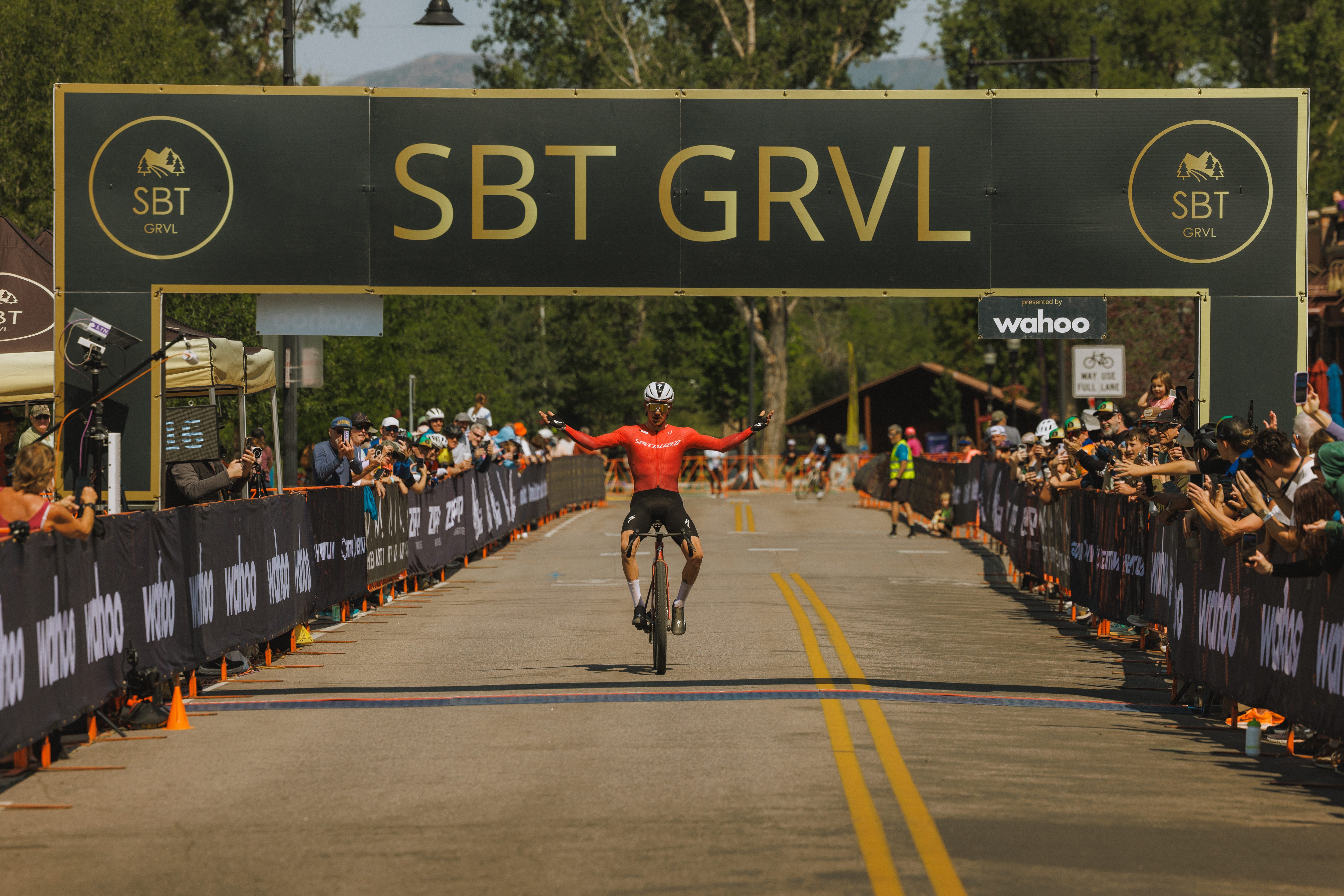
Away from results, Specialized needs to pour fuel on their team’s media fire. Gravel is the awkward middle child between road and mountain bike and rarely gets consistent attention. The team itself needs to take control.
Specialized are good at storytelling, especially when it comes to product: Unbound and the Crux proved that. What they need to do is spend more time telling stories about their riders. People care about people, and it’s much harder to get excited about a bike’s wind-tunnel performance than it is to become invested in a rider’s personality.
The proof is one of their WWT teams, FDJ-Suez. The work started pre-Specialized in 2024, and they’ve built from a relatively normal French team to arguably the strongest brand in women’s cycling. Star power has helped, but it’s the personalities that people have bought into.
Specialized has the opportunity to replicate that with its factory teams. They already have the star riders; they just need to help fans get to know them better. Build that, and loyalty to the team and the brand will follow.
Trek Driftless
Perhaps the team with the biggest potential, but they also have the biggest hurdle. Trek Driftless has performed decently well on the bike, and winning both the American National titles was a serious feat. But calling them a team feels wrong. They are often a group of individuals.
They have got a lot right. Their brand name, ‘Driftless’, is something many miss and ‘The Road to Unbound - Driftless Broadcast’ YouTube video is sitting at over 200k views, showing that the interest is there. But they only made one episode…
There’s much to be improved, namely an identity with a matching kit, and clear collaboration between their riders. It’s hard to point to what the Trek Driftless brand actually is, which is a shame as they have the riders to build around.
Cobe Freeburn is one of gravel’s next stars and has the personality to be the face of the team. Torbjorn and Daxton have both proved their ability. And on the women’s side, Cecile Lejeune ticks all the right boxes.
From the outside, it seems Trek want to emulate Specialized’s success but with a fraction of the budget. That’s a fight they can’t win, and they’d be better off as hyper-organised plucky underdogs that punch above their weight, exactly what Cobe did at Unbound.
Trek Driftless has many of the right ingredients, but they’re yet to make them work together.
PAS Racing
The Danish team consistently punch above their weight on a presumed tight budget, and most of that is credit to their talent scouting. Mads Wurtz Schmidt came in 2025 and won big before transferring to Specialized. How do you replace Mads’ results? Well, Magnus Bak Klaris brought them Rainbows at this year’s World Champs. With rumours that Magnus could be heading out of the door, they may have that challenge once more.
It’s not just the men’s results. Karo Migon has won Unbound and the Traka. And Cecily Decker finishing on the podium of Unbound, Leadville and the LTGP shows the team’s strength.
I have few notes for PAS Racing, and they are doing a lot right. The biggest change I’d make is to ensure that their riders rally around a single cause at the same races more often. I’d also search for a bike sponsor. If the Magnus rumour is true, it implies that PAS don’t have a mega budget. Bringing on an additional title bike sponsor would plug that financial gap and also aid the case of riders working together.
They should also double down on storytelling; that’s what the PAS brand was built on. Given the success of their ‘Road to Traka’ documentary, it clearly works for them.
Canyon All Terrain Racing (ATR)
Canyon ATR are on their way to becoming a very good bike racing team. They’re all in the same kit and bikes, teamwork is happening and they have a lot of the obvious dialled. The whole “discipline free approach to off-road performance” is kinda nonsense though, you’re a gravel team guys.
On paper, I do like the commitment to ‘All Terrain’, but it has created some problems, notably team size. They launched with thirteen riders, which even if we presume modest salaries is a big financial commitment.
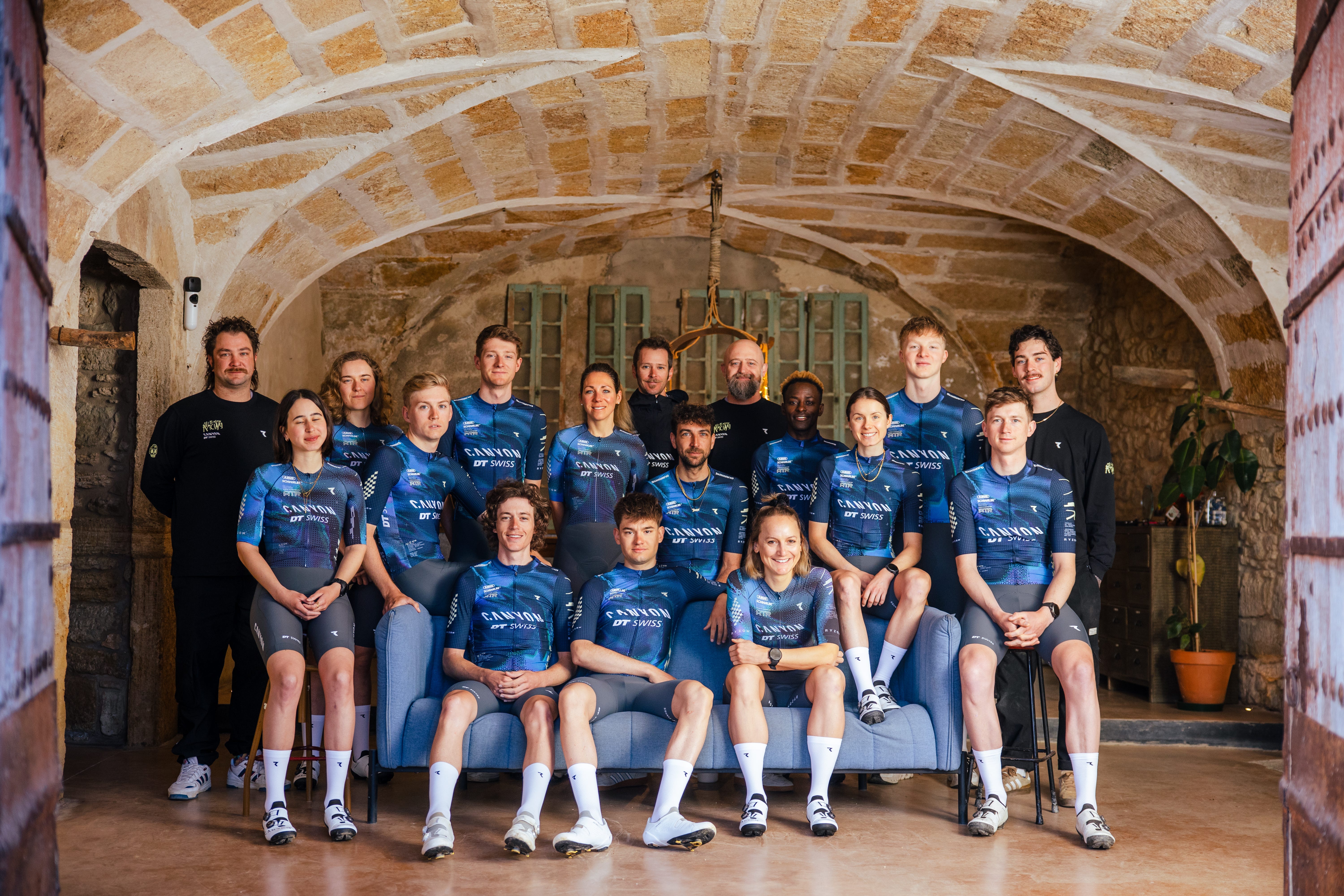
Furthermore, it seems they’ve split their targets between Europe and the US. Bradyn Lange massively carried them in the US, Nele Laing and Larissa Hartog shouldered Europe. Going forward, I’d like them to condense their focus. That means going to every race as a team, and building the squad around the riders who’ve already shown they can win. If they continue the continental split it's more difficult to create the collective identity that makes a team a team.
Gravel Burn has been the case study for this. The whole team is in South Africa as a singular unit and their results, teamwork, and media have all been stellar. They should continue this approach into 2027.
Who’s next?
More teams are set to launch: Ventum, BMC, Pon Group, Orbea, and Factor are all said to be coming to the market, or expanding their current offerings. I’m sure there are others I’ve missed, or haven’t heard about yet.
Whether gravel can sustain this remains to be seen. More than once in the last ten days, I’ve heard the team-ification of gravel compared to US road racing in the 2010s. On the surface, that’s a good thing. There were lots of teams, lots of racing and plenty of riders getting paid. It also implies an iceberg ahead.
That’s why the structure of these teams matters so much. Gravel gets confusing in the in-betweens. Brands launch collectives of riders which can either mean a little or a lot.
Scott Bikes have this problem with Matt Wilson, Cam Jones, Brennan Wertz and Martins Blums. Having the same title sponsor doesn’t make the four teammates even though Scott as a brand would benefit from that.
The RCC (Rapha) project and Factor Racing both had similar strategies in 2026: spend money on a range of top athletes and hope it figures itself out. It did kinda end up working, but I’d love to hear the long-term thinking behind it.
What I’d do if I ran a gravel team.
If you’re launching as a gravel team, there are a few fundamentals to get right. I recently co-wrote about this with Peter Abraham regarding the Women’s World Tour:
Have a purpose: what is the goal of your team apart from winning races and selling bikes?
Hire the right people: It doesn’t matter how much money you spend on top riders; if you don’t have the right management structure, it’s doomed to fail.
Race as a team: Make sure your riders are going to race as a team. This can be stipulated in contracts and incentivised by shared bonus schemes.
Create a distinct identity: Have a clear colourway, name, and culture. The basics of sports marketing.
Storytelling: Generating consistent earned media is difficult, so if you’re not doing it yourself, then you’re losing half the battle.
Appeal to the masses: This starts by getting #4 and #5 right, but effort has to be put in at events too. The case study for all of this is Alexey Vermeulen.
Win. You’re a bike racing team; a key step to legitimacy is winning bike races.
Self-plug, specifically on point #2: I’m actively in the job market and want to work in team management.
One final opinion before I end this article is that Modern Adventure should have signed Matt Wilson.
The Kiwi is clearly an insane talent and would have been a valuable addition to their road team. More importantly, he could have given Modern Adventure representation on the American gravel scene. There’s the bonus that the team’s new co-title sponsor, Factor, is upping its investment in gravel for 2027.
It would have been a win-win for all parties.
To show how fast things change, here’s something I wrote in July 2024: https://www.joelaverick.com/p/are-pro-gravel-teams-coming